In case of inquiries, contact info@care4bones.org

Achondroplasia 

Achondroplasia is the most common genetic cause of disproportionate dwarfism, affecting roughly 1 in 20,000 to 30,000 babies. It is caused by a gene mutation that impairs the conversion of cartilage into bone, resulting in short limbs, an average-sized torso, and a prominent forehead. While often inherited, over 80% of cases are spontaneous mutations in families with average-height parents. Individuals have normal intelligence and can lead full, active lives, though they may face health complications like sleep apnea or spinal issues. 

YouTube source: Medical Centric Podcast


Found 10 Results

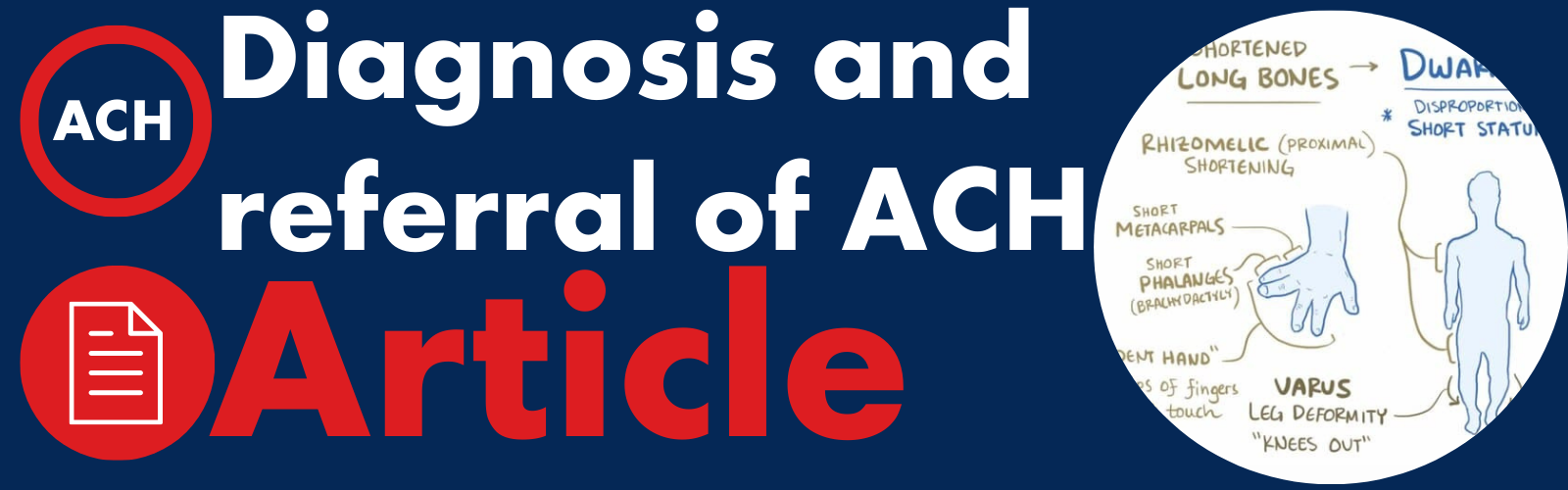
Optimising the diagnosis and referral of achondroplasia: Achondroplasia Forum best practice recommendations

Optimising diagnosis

AdultsChildren

Lifetime impact of ACH study (LIAISE): findings from a multinational observational study

Lifetime impact of ACH study

AdultsChildren

Real‑world evidence in achondroplasia: considerations for a standardized data set

Considerations for standardized data set

AdultsChildren

Achondroplasia Forum Practical Considerations for Following Adults with Achondroplasia

Practical considerations for following adults with ACH

Adults

Approach to the Patient with Achondroplasia— New Considerations for Diagnosis, Management, and Treatment

Diagnosis, Management and treatment

AdultsChildren

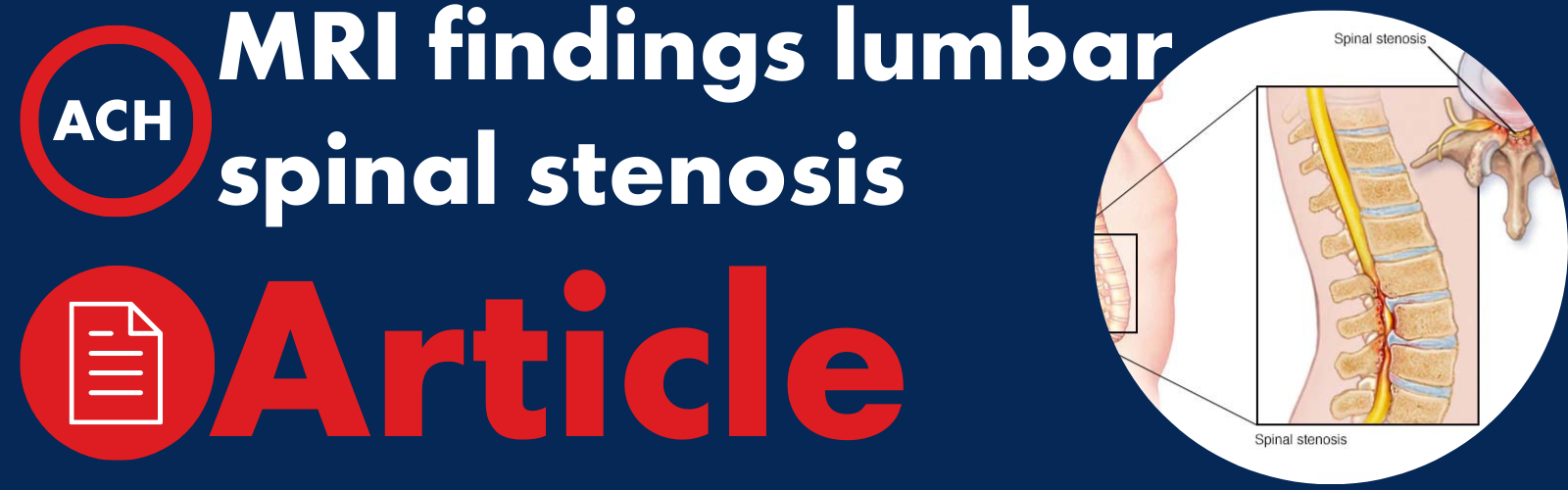
Assessing the clinical relevance of MRI findings in adult achondroplasia patients with lumbar spinal stenosis

Clinical relevance MRI findings ACH patients with lumbar spinal stenosis

AdultsChildren

Current Strategies and Future Prospects of Achondroplasia Treatment: A Systemic Review

Systemic review strategies and future prospects of ACH treatment

AdultsChildren

Functioning and well-being in older children and adolescants with Achondroplasia

Functioning and well-being with ACH

Emotional Wellbeing 13 - 25 years

Management of sleep-disordered breathing in ACH: guideline principles

Sleep-disordered breathing in ACH

Sleep AdultsChildren

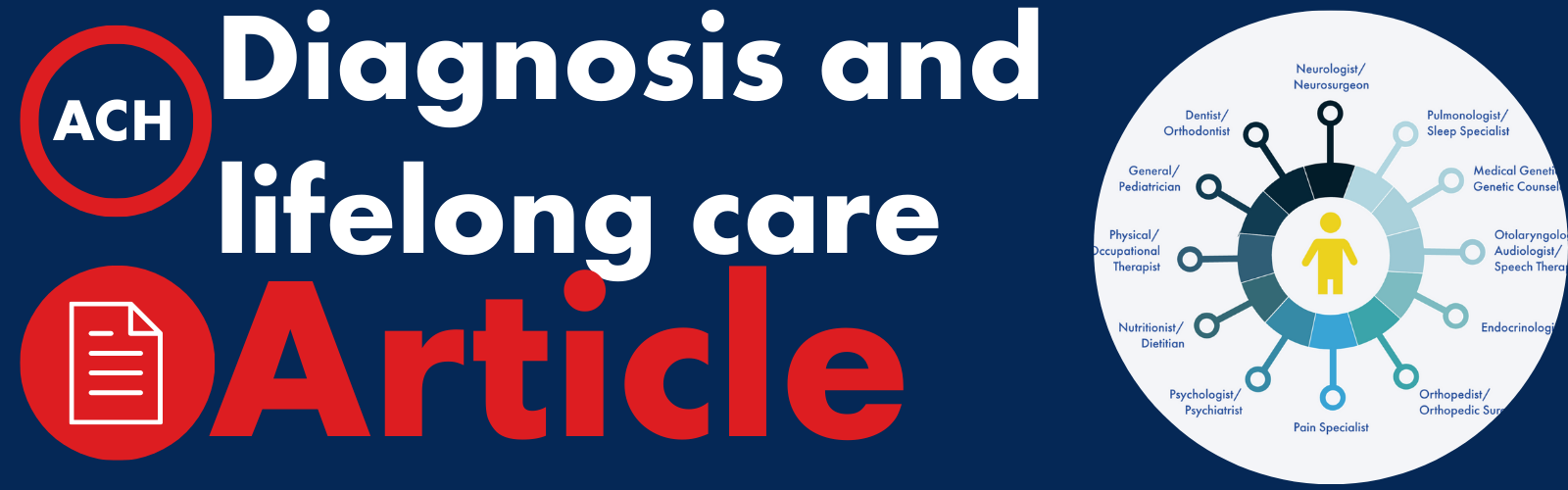
Diagnosis, management and lifelong care with ACH

Diagnosis, management and lifelong care

Emotional WellbeingMultidisciplinary Treatment AdultsChildren
Page 1 of 1